AI Chatbot for Website: Benefits, Features, and How It Works
An effective website chatbot should do more than answer questions. It should understand what the visitor needs, provide reliable information, and guide them toward the next useful action. When automation is combined with accurate business information and human support, it can become a valuable part of the customer journey.
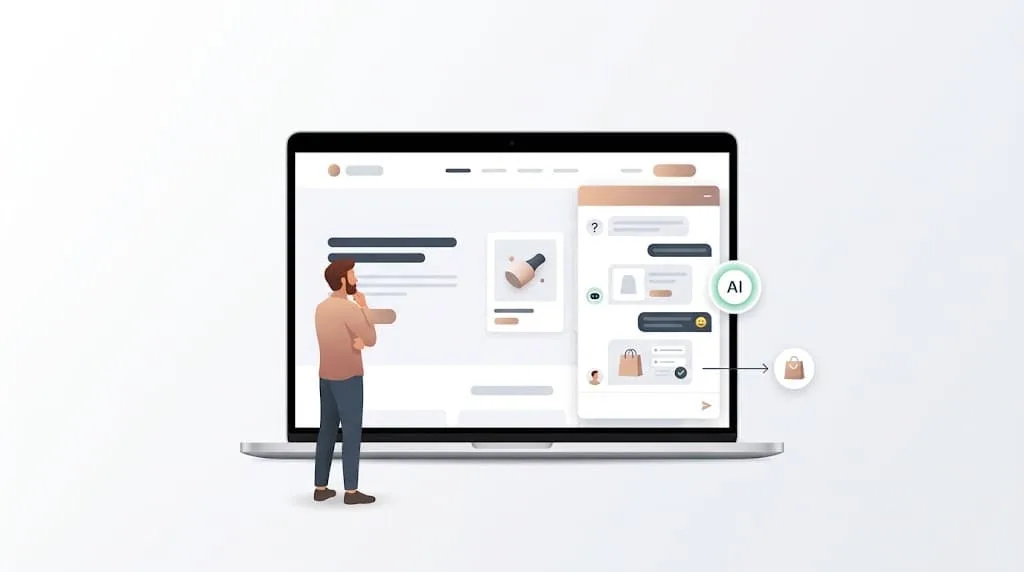
An AI chatbot for website can help businesses turn their website from a simple information page into an active customer communication and sales channel. Instead of making visitors search through multiple pages or wait for a team member to answer a question, an AI chatbot can provide immediate assistance and guide them toward the information or action they need.
For an online store, this could mean helping a visitor find the right product, answering questions about delivery, or guiding them toward an order. For a service business, it could mean answering common questions, collecting lead information, or directing visitors to the right service.
As more customers expect businesses to respond quickly, website chatbots are becoming an increasingly practical part of online customer service. But simply adding a chatbot to a website is not enough. The chatbot needs to provide useful answers, understand customer questions, and support the actual goals of the business.
This guide explains how AI website chatbots work, what businesses can use them for, which features matter most, and how website automation can fit into a broader customer communication strategy.
Table of Contents
-
What Is an AI Chatbot for a Website?
-
How Does an AI Website Chatbot Work?
-
Why Do Businesses Use AI Chatbots on Websites?
-
What Can an AI Chatbot Do on a Website?
-
AI Chatbot for E-commerce Websites
-
AI Chatbot for Lead Generation
-
AI Chatbot for Customer Support
-
Important Features of a Website AI Chatbot
-
AI Chatbot vs. Website Live Chat
-
How to Choose an AI Chatbot for Your Website
-
How Website Automation Fits Into the Customer Journey
-
How Reply.BD Supports Website-Based Businesses
-
Common Mistakes When Adding an AI Chatbot
-
Frequently Asked Questions
-
Final Thoughts
What Is an AI Chatbot for a Website?
An AI chatbot for a website is a software tool that communicates with visitors through a chat interface embedded on a website. It uses artificial intelligence to understand customer questions and provide responses based on the information available to it.
A traditional website may provide information through product pages, FAQs, contact pages, and other sections. Visitors have to find and read that information themselves.
A chatbot adds another layer to the experience.
Instead of searching through several pages, a visitor can ask a question directly:
-
“Do you deliver outside Dhaka?”
-
“Which product is best for a small business?”
-
“How much does this service cost?”
-
“How can I place an order?”
-
“Can I talk to someone?”
-
“Do you have this product in another size?”
The chatbot can then provide a relevant answer or direct the visitor toward the next step.
The quality of the experience depends heavily on the information provided to the chatbot. A business should give it accurate product, service, pricing, delivery, and policy information rather than expecting AI alone to know the company's latest details.
How Does an AI Website Chatbot Work?
An AI website chatbot generally works by combining conversational AI with information and instructions supplied by the business.
Step 1: A Visitor Opens the Website
The visitor arrives through search, advertising, social media, a referral, or another source.
They may already know what they want, or they may still be researching their options.
Step 2: The Visitor Starts a Conversation
The visitor can ask a question using natural language instead of navigating through multiple menus.
For example:
“I need a chatbot for my online store. What can it do?”
Step 3: The AI Interprets the Question
The chatbot analyzes the visitor's message and determines what information is relevant.
This is one of the major differences between modern AI chatbots and simple rule-based chat widgets.
Step 4: The Chatbot Provides an Answer
The chatbot responds using the business information and instructions available to it.
For example, it might explain a service, recommend a product, answer a frequently asked question, or provide a link to a relevant page.
Step 5: The Visitor Takes the Next Action
A useful chatbot should not simply answer questions. It should help visitors move forward.
Depending on the business, the next step could be:
-
Viewing a product
-
Starting an order
-
Filling out a form
-
Requesting a consultation
-
Contacting a salesperson
-
Opening Messenger
-
Visiting a specific page
This is why website chatbot strategy should be connected to the overall customer journey rather than treated as an isolated feature.
Why Do Businesses Use AI Chatbots on Websites?
A website is available around the clock, but a business team usually is not.
Visitors may arrive late at night, during weekends, or while employees are busy with other work. If they have an important question and cannot find an answer, they may simply leave the website.
An AI chatbot can help reduce this friction.
Faster Answers
Customers do not always want to browse through an FAQ section to find a simple answer.
A chatbot allows them to ask directly and receive an immediate response when the requested information is available.
Reduced Repetitive Support Work
Businesses often answer the same questions repeatedly.
A website chatbot can handle common questions about:
-
Products
-
Pricing
-
Delivery
-
Payment methods
-
Services
-
Business hours
-
Ordering procedures
-
Policies
This allows employees to spend more time on conversations that actually require human involvement.
Better Website Engagement
A visitor who is confused about a product or service may leave without contacting the company.
A chatbot gives that visitor another opportunity to ask a question before leaving.
Support Outside Working Hours
Businesses can continue answering supported questions even when employees are unavailable.
This does not mean the chatbot should pretend to be a human. It should clearly handle questions within its capabilities and provide an appropriate path to human assistance when necessary.
Support for Sales
A chatbot can help visitors understand products and services before they purchase.
For e-commerce businesses, this may involve product recommendations. For service companies, it could involve explaining available services and collecting lead information.
What Can an AI Chatbot Do on a Website?
The possibilities depend on the platform and configuration, but several applications are particularly useful for businesses.
Answer Frequently Asked Questions
The simplest application is automated FAQ support.
Instead of forcing visitors to search through a long FAQ page, a chatbot can answer questions conversationally.
For example:
Visitor: “How long does delivery take?”
Chatbot: It can provide the delivery timeframe configured by the business.
This is especially useful for questions that customers ask repeatedly.
Recommend Products
An online store can use conversational assistance to help customers choose between products.
A visitor might say:
“I need something for a small office and my budget is around 5,000 taka.”
If the chatbot has accurate product information, it can identify suitable options based on the available catalog.
The recommendation should be based on real product information rather than invented features or unavailable products.
Collect Leads
A service-based business can use a chatbot to collect information from potential customers.
It might ask for:
-
Name
-
Phone number
-
Email address
-
Business type
-
Required service
-
Preferred contact method
The business can then follow up with qualified prospects.
Guide Visitors to the Right Page
Not every question needs a detailed chatbot response.
Sometimes the best answer is to direct the visitor to the relevant page.
For example:
“Would you like to see our pricing plans?”
The chatbot can then guide the visitor to the pricing section.
Connect Customers With a Human
AI should not be expected to handle every situation.
If a customer has a complaint, requires customized assistance, or simply wants to speak with someone, the chatbot should make the transition to human support as straightforward as possible.
AI Chatbot for E-commerce Websites
E-commerce is one of the strongest use cases for website chatbots because online shoppers often have questions before completing a purchase.
A product page may contain specifications, photographs, pricing, and other information, but customers can still have questions.
For example:
-
“Is this available right now?”
-
“Which one should I choose?”
-
“Is delivery available in my area?”
-
“What is the delivery charge?”
-
“Can I order through Messenger?”
-
“Does this come in another color?”
A chatbot can help answer these questions and reduce the amount of manual support required.
Helping Customers Find Products
Customers do not always know the exact name of the product they need.
They may describe a problem instead.
For example:
“I need a product for my home office.”
A conversational chatbot can ask follow-up questions and use available product information to narrow down suitable options.
Reducing Purchase Friction
Every additional step between discovering a product and placing an order creates an opportunity for a customer to leave.
A chatbot can help answer questions during that decision-making process and guide the visitor toward the appropriate purchase action.
Supporting Existing Sales Channels
A website does not necessarily have to replace other customer communication channels.
For businesses that already generate significant sales through Facebook and Messenger, the website can work alongside Messenger automation as part of a broader sales system.
AI Chatbot for Lead Generation
Not every business sells physical products.
Consultants, agencies, software companies, service providers, and other businesses may primarily need qualified leads.
For these businesses, a chatbot can act as an initial qualification layer.
Instead of displaying only a “Contact Us” button, the website can begin a conversation.
For example:
Visitor: “I need help setting up online sales.”
The chatbot could ask what type of business they operate, what they currently use, and what type of assistance they need.
The information collected can then help the sales team understand the prospect before starting a personal conversation.
This can make lead handling more organized and reduce the time spent on unqualified inquiries.
AI Chatbot for Customer Support
Customer support is another major use case.
A business may receive hundreds of similar questions every month. Answering each one manually can consume considerable time.
A website chatbot can handle common support questions while allowing human agents to focus on more complicated cases.
For example, the chatbot can help with:
-
Order-related questions
-
Delivery information
-
Product information
-
Basic troubleshooting
-
Business policies
-
Service availability
-
Account-related guidance
However, businesses should be careful with sensitive or complicated support requests. When the chatbot does not have enough information to provide a reliable answer, escalating the conversation is often better than guessing.
Important Features of a Website AI Chatbot
Not all chatbot platforms offer the same capabilities. Before choosing one, businesses should look beyond the simple presence of an “AI chatbot” feature.
Natural-Language Conversations
Customers should be able to communicate naturally rather than being forced through rigid menus.
The chatbot should understand different ways of asking similar questions.
Business-Specific Knowledge
The chatbot should be able to use information specific to the business.
Generic AI knowledge is not enough to answer questions about your current prices, products, delivery policies, or services.
Product Information
For e-commerce businesses, product information is essential.
The chatbot should have access to accurate information about products, variants, pricing, and availability where supported.
Human Handoff
A business should always have a way to take over conversations when automation is no longer appropriate.
Multilingual Support
For businesses serving customers in Bangladesh, multilingual communication can be particularly important.
Customers may communicate in Bangla, English, or Banglish depending on their preference.
Easy Management
Business owners should be able to update information and instructions without needing to rebuild the entire chatbot whenever something changes.
Analytics
Analytics can help businesses understand how customers are interacting with the chatbot and where conversations may be failing.
AI Chatbot vs. Website Live Chat
AI chatbots and traditional live chat serve different purposes.
| Feature | AI Chatbot | Traditional Live Chat |
|---|---|---|
| Initial response | Automated | Usually requires an agent |
| Availability | Can operate beyond business hours | Depends on staff availability |
| Repetitive questions | Can automate responses | Usually handled manually |
| Human interaction | Available when needed | Primary method |
| Scalability | Can handle many routine conversations | Limited by available agents |
| Complex issues | Usually needs human escalation | Handled directly by agents |
| Best use | Routine support and initial assistance | Personalized support and complex issues |
The two approaches do not have to compete.
A strong customer support system can use AI to handle routine conversations while keeping human agents available for situations that require personal attention.
How to Choose an AI Chatbot for Your Website
Before choosing a chatbot, start with the problems you want it to solve.
If your main problem is repetitive customer questions, prioritize knowledge-based responses and easy content management.
If you want to generate leads, look for lead collection and qualification capabilities.
If you operate an online store, product information, recommendations, and purchase-related workflows may be more important.
Also consider your existing customer channels.
A business that receives most of its inquiries through Facebook may need a solution that works effectively with Messenger rather than choosing a website chatbot in isolation.
Ask These Questions Before Choosing
Where do my customers communicate most?
Your chatbot should fit the channels customers already use.
What questions do customers ask most frequently?
These should become the foundation of your chatbot's knowledge.
Can the chatbot use my actual business information?
A chatbot should not rely solely on general AI knowledge.
Can customers reach a human?
There should be a clear escalation path.
Does it support my customers' languages?
This is especially important when your audience communicates in multiple languages.
Can the system grow with my business?
The solution should remain useful as your product catalog, customer volume, and sales process expand.
How Website Automation Fits Into the Customer Journey
A website chatbot should not operate separately from the rest of your marketing and sales system.
Consider a customer who sees a Facebook advertisement, visits a landing page, explores a product, asks a question, and eventually wants to order.
Each stage has a different purpose.
The advertisement attracts attention.
The landing page provides focused information.
The chatbot answers questions.
Messenger can support direct customer communication.
The order process completes the transaction.
When these elements work together, businesses can create a smoother path from initial interest to purchase.
This is particularly important for businesses in Bangladesh that use Facebook, Messenger, websites, and landing pages together as part of their online sales strategy.
How Reply.BD Supports Website-Based Businesses
Reply.BD is primarily built around AI-powered Facebook Messenger automation, but its broader services are relevant to businesses that are building a complete online sales presence.
The platform helps businesses automate customer conversations on Facebook Messenger using Bangla, English, and Banglish. It can answer customer questions, provide product information, recommend products, and support order collection.
For businesses that also need an online store or focused campaign page, Reply.BD provides e-commerce website and advertising landing-page services.
This creates an opportunity to connect different parts of the customer journey.
For example, a business could use a dedicated landing page to present an offer, direct customers toward Messenger for questions, and use Reply.BD to automate routine Messenger conversations and support order collection.
This approach can be particularly useful for businesses that already depend on Facebook for customer acquisition but want a more organized online presence.
The important distinction is that Reply.BD should not be presented as simply a generic website chatbot. Its core strength is AI-powered Messenger automation, while its website and landing-page services can support the broader online sales ecosystem.
Businesses interested in exploring these services can visit Reply.BD.
Common Mistakes When Adding an AI Chatbot
Trying to Automate Everything
A chatbot should handle tasks that are suitable for automation.
Trying to force every customer interaction through AI can make the experience frustrating.
Using Outdated Information
If your prices, products, delivery charges, or policies change, the chatbot information should also be updated.
Giving the Chatbot Too Much Freedom
A business should establish clear instructions about what the chatbot can and cannot say.
This helps reduce inaccurate answers and protects the business from unnecessary confusion.
Ignoring Human Support
Some customers simply want to speak to a person.
Making human assistance difficult can damage an otherwise useful automated support system.
Measuring the Wrong Things
A chatbot generating thousands of messages is not necessarily successful.
Businesses should consider more meaningful outcomes, such as:
-
Questions successfully answered
-
Leads generated
-
Orders supported
-
Conversations requiring human intervention
-
Customer satisfaction
-
Sales influenced by chatbot interactions
The purpose of automation is to improve the business process, not simply increase the number of automated messages.