AI Chatbot for Business: Benefits, Uses, and How to Get Started
Business automation delivers the greatest value when it removes repetitive work without making customer interactions feel impersonal. An effective AI chatbot should provide accurate information, help customers take the next step, and make human assistance available when the situation requires it. The goal is not simply to automate conversations, but to make every customer interaction more useful.
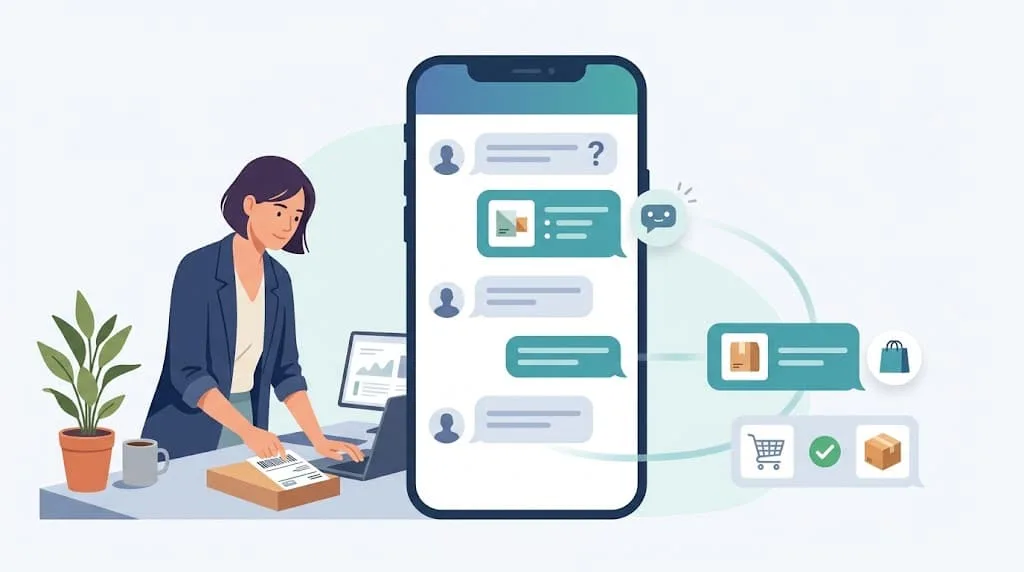
Running a business today involves more than selling good products or providing reliable services. Customers expect quick answers, accurate information, and a smooth buying experience whenever they contact a business. An AI chatbot for business can help meet these expectations by handling routine conversations, answering customer questions, recommending products, and supporting sales without requiring a team member to respond manually to every message.
For businesses that receive a steady stream of inquiries through Facebook Messenger, this can make a meaningful difference. Instead of spending hours answering questions about prices, product availability, delivery charges, and payment methods, business owners can automate many of these conversations and focus on other important tasks.
However, choosing the right chatbot requires more than looking at the latest AI technology. Businesses need a solution that fits their customers, communication channels, and daily operations.
In this guide, we will explain how business chatbots work, where they provide the most value, what features to look for, and how businesses can use tools such as Reply.BD to manage customer conversations more efficiently.
Table of Contents
-
What Is an AI Chatbot for Business?
-
How Does an AI Business Chatbot Work?
-
Key Benefits of Using an AI Chatbot for Business
-
Common Business Uses of AI Chatbots
-
AI Chatbot vs. Traditional Chatbot
-
Essential Features to Look for in a Business Chatbot
-
How to Choose the Right AI Chatbot for Your Business
-
How Reply.BD Helps Businesses Automate Messenger Sales
-
Common Mistakes to Avoid
-
Frequently Asked Questions
-
Final Thoughts
What Is an AI Chatbot for Business?
An AI chatbot for business is software that uses artificial intelligence to communicate with customers, understand their questions, and provide relevant responses. Depending on the platform, it can assist with customer support, product recommendations, lead collection, order processing, and other repetitive communication tasks.
Traditional chatbots usually depend on predefined rules, buttons, or keywords. An AI-powered chatbot can interpret a wider variety of natural-language questions, making conversations more flexible and convenient for customers.
For example, an online clothing store might receive messages such as:
-
“How much is this dress?”
-
“Ei dress er price koto?”
-
“Is this available in black?”
-
“ঢাকার বাইরে ডেলিভারি কত?”
-
“I want to place an order.”
Although these questions differ in wording and language, they relate to familiar business needs. A properly configured AI chatbot can respond using the business information and product details available to it.
For businesses operating through Facebook, a Messenger-focused chatbot can be particularly useful because customers can ask questions and make purchasing decisions within the same conversation.
How Does an AI Business Chatbot Work?
An AI business chatbot combines conversational AI with information about a company's products, services, and operating rules. Its exact capabilities depend on the platform and how it has been configured.
A typical process involves five steps.
1. A Customer Sends a Message
A customer contacts the business with a question about a product, price, delivery policy, or service. The chatbot receives the message through a supported communication channel.
2. The Chatbot Interprets the Question
The AI identifies what the customer is asking rather than relying exclusively on an exact keyword match. This helps it respond to different expressions of the same question.
3. It Uses Available Business Information
The chatbot draws on the information supplied to it, such as product descriptions, prices, available variants, delivery details, and business instructions. Keeping this information accurate is essential to providing reliable answers.
4. It Responds or Supports the Next Step
The chatbot provides an answer, recommends a relevant product, or asks a follow-up question. In a sales-focused workflow, it may also collect the information needed to place an order.
5. A Human Takes Over When Necessary
Not every conversation should be automated. Complaints, unusual requests, sensitive issues, and questions requiring human judgment may need personal attention. A suitable chatbot should allow the business owner or support team to take control of the conversation.
This combination of automation and human involvement helps businesses maintain responsive communication without removing the personal support customers may need.
Key Benefits of Using an AI Chatbot for Business
The value of a chatbot depends on the problems it solves. For businesses managing frequent customer inquiries, several benefits are particularly relevant.
Faster Customer Responses
Customers may contact a business while the owner is handling deliveries, managing stock, attending meetings, or sleeping. Delayed responses can interrupt the buying process.
An AI chatbot can answer supported questions at any time, helping customers receive information without waiting for a team member to become available.
Reduced Repetitive Work
Many customer conversations involve the same questions about pricing, product availability, delivery charges, payment options, and ordering procedures.
Automating these routine exchanges reduces the amount of repetitive work business owners and support teams need to handle manually.
Better Support Outside Business Hours
Online customers do not always shop during conventional working hours. Some browse products late at night, while others message during weekends or holidays.
A properly configured chatbot can continue handling supported inquiries outside regular business hours, giving customers a way to move forward even when the business owner is unavailable.
More Consistent Product Information
When multiple people answer customer messages, responses can sometimes differ. An AI chatbot configured with accurate product information and clear instructions can help maintain consistency across conversations.
Businesses should still review their information regularly and monitor responses to catch mistakes or outdated details.
More Efficient Order Collection
For online sellers, answering a question is only one part of the sales process. The customer may also need to choose a product, confirm a variant, and provide delivery information.
A sales-focused chatbot can guide customers through these steps and collect details such as their name, phone number, and address when appropriate.
Greater Visibility Into Customer Conversations
Chatbot analytics can help business owners understand how many replies are being sent, how conversations progress, and where customers may be dropping out of the buying process.
These insights can guide improvements to product descriptions, pricing communication, and the overall customer experience.
Common Business Uses of AI Chatbots
AI chatbots can support different types of businesses, but the most useful applications depend on how customers interact with each company.
E-commerce and F-Commerce
Online sellers frequently receive questions about product prices, sizes, colors, stock availability, and delivery options. A chatbot can answer these questions using an updated product catalog and help customers move toward placing an order.
For Facebook-based sellers, Messenger automation is especially relevant because customer inquiries and purchasing conversations often happen directly on the business page.
Customer Support
A chatbot can answer common questions about business hours, delivery policies, return procedures, and service availability. More complicated issues can be passed to a human representative.
This allows support teams to spend less time answering routine questions and more time resolving problems that require personal attention.
Lead Collection
Service providers can use chatbots to collect basic information from potential customers, such as their names, contact details, and service requirements.
The business can then review these inquiries and follow up with people who are interested in its services.
Product Recommendations
When a customer is unsure which product to choose, a chatbot can use available product details and the customer's stated preferences to suggest suitable options.
For example, a customer shopping for a gift might ask for something within a particular budget. A chatbot with an accurate catalog can help narrow the choices.
Sales Campaigns and Landing Pages
Businesses running Facebook advertisements need a clear path from the advertisement to the purchase. A dedicated landing page can present product information, answer common questions, and provide an order form.
When combined with Messenger automation, this approach can help businesses manage different stages of the customer journey more systematically.
AI Chatbot vs. Traditional Chatbot
Both traditional and AI-powered chatbots can automate customer communication, but they work differently.
| Feature | Traditional Chatbot | AI-Powered Chatbot |
|---|---|---|
| How it responds | Follows predefined rules and flows | Interprets natural-language questions |
| Handling different wording | Often depends on keywords or configured options | Can understand more variations in wording |
| Product assistance | Provides predefined information | Can recommend products using available information |
| Conversation flexibility | Usually limited to designed paths | Can support more flexible conversations |
| Setup requirements | Requires rules and conversation flows | Requires reliable information, instructions, and monitoring |
| Human support | Depends on the platform's handoff features | Can support human handoff when available |
| Best suited for | Simple, predictable interactions | More varied customer questions and sales conversations |
Neither approach is automatically right for every business. A traditional chatbot may be sufficient when customers follow a simple process. An AI-powered solution can be more appropriate when people ask questions in different ways and expect more conversational responses.
The important consideration is whether the chatbot can handle the tasks your business actually needs.
Essential Features to Look for in a Business Chatbot
Before choosing a platform, evaluate its capabilities against your daily business requirements.
Natural-Language Understanding
Customers rarely communicate using perfectly structured sentences. They may use abbreviations, informal expressions, spelling variations, or a mixture of languages.
A useful AI chatbot should be able to interpret common variations in customer questions and respond appropriately.
Product Catalog Integration
Businesses selling physical products should look for a way to provide the chatbot with accurate product information, including prices, descriptions, images, and available variants.
This helps the chatbot answer product-related questions without relying on generic responses.
Automated Order Collection
For businesses selling through Messenger, the ability to collect order details can be more valuable than a chatbot that only answers FAQs.
Look for workflows that capture the required customer information and make collected orders accessible to the business.
Human Handoff
Automation should not prevent customers from receiving personal assistance. Choose a platform that lets your team intervene when a conversation needs human judgment.
Language Support
If your customers communicate in Bangla, English, or Banglish, language flexibility matters. The chatbot should handle the languages your audience actually uses.
Analytics and Conversation Management
Reporting features can help you review chatbot activity, understand customer interactions, and identify opportunities to improve the sales process.
Clear Instructions and Business Controls
The platform should allow you to define how the chatbot communicates, what information it can provide, and which claims it must avoid. These controls are important for maintaining an appropriate brand voice and reducing misleading responses.
How to Choose the Right AI Chatbot for Your Business
Choosing a chatbot becomes easier when you begin with your actual business problems rather than a long list of features.
Start by identifying where most customer conversations happen. If your customers primarily contact you through Facebook Messenger, a Messenger-focused solution may be more practical than a platform designed mainly for website live chat.
Next, review the questions customers ask most frequently. If they mainly ask about prices, product variants, and delivery, prioritize accurate product information and automated replies. If your business receives complex service inquiries, consider lead qualification and human handoff capabilities.
You should also evaluate the following factors:
-
Ease of setup: Can your team configure the chatbot without extensive technical assistance?
-
Supported channels: Does it work where your customers already communicate?
-
Pricing: Are the reply limits, product limits, and additional costs suitable for your budget?
-
Control: Can you define the chatbot's instructions and take over conversations?
-
Privacy: How does the provider handle customer conversations and personal information?
-
Scalability: Will the platform continue to meet your needs as your business grows?
Finally, test the chatbot with real examples from your business. Ask questions in the same language and style your customers use. Check whether it provides correct information, follows your instructions, and handles uncertain situations appropriately.
How Reply.BD Helps Businesses Automate Messenger Sales
Reply.BD is designed for businesses that sell through Facebook and want to manage customer conversations more efficiently. Rather than functioning only as a basic automated greeting system, it focuses on supporting the Messenger sales journey, from answering product questions to collecting order details.
AI-Powered Messenger Replies
Reply.BD generates contextual responses to customer inquiries, helping businesses answer common questions without manually typing every reply. Its AI supports Bangla, English, and Banglish, making it relevant for businesses serving customers in Bangladesh.
Product Recommendations and Pricing Information
Businesses can upload product catalogs containing information such as product images and variants. The AI can use the available catalog information to answer product questions, quote prices, and recommend relevant items.
Accurate catalog information remains essential to providing dependable responses.
Automated Order Collection
When a customer is ready to purchase, Reply.BD can collect their name, phone number, and address, then create an order in the dashboard for the business to process.
This helps reduce the manual steps involved in moving a Messenger conversation toward an order.
Human Takeover
Business owners remain in control of their customer conversations. Reply.BD allows a user to pause the bot and respond personally when needed, with automatic resumption after the configured idle period.
Analytics and Business Management
The dashboard provides visibility into activity such as replies sent and conversations converted. This information can help sellers review how automation is being used in their sales process.
More Than Messenger Automation
Reply.BD also offers e-commerce website and advertising landing-page services. Businesses can use product pages, checkout functionality, and focused landing pages to support their broader online sales activities.
These services are particularly relevant to businesses that want to connect customer communication with a more organized online buying experience.
Businesses interested in testing Messenger automation can explore the Reply.BD website and start with its seven-day free trial, which does not require a credit card.
Common Mistakes to Avoid When Using an AI Chatbot
Even a capable chatbot can produce disappointing results when it is poorly configured or used for the wrong tasks.
Providing Inaccurate Business Information
Outdated prices, incorrect product variants, and unclear delivery policies can lead to poor customer experiences. Review your catalog and business instructions whenever information changes.
Automating Every Conversation
Some situations require empathy, negotiation, or personal judgment. Make sure customers can reach a human when automation is insufficient.
Choosing a Platform Without Checking Its Limits
Some plans limit the number of replies, supported pages, or product uploads. Review these restrictions before selecting a plan to avoid unexpected interruptions.
Ignoring Conversation Quality
Do not judge performance only by the number of automated replies. Review whether the chatbot answers correctly, helps customers find suitable products, and supports meaningful business outcomes.
Expecting Guaranteed Sales Growth
A chatbot can improve responsiveness and reduce repetitive work, but it cannot guarantee sales. Product quality, pricing, advertising, customer trust, stock availability, and delivery performance still influence purchasing decisions.
The best results come from combining automation with reliable business information and a well-managed sales process.